Solutions
  Products
  Industries
 Resource Center
  Company
  Contact

 North America
  Europe
  Deutschland
  Asia-Pacific
  Canada (Français)
  Africa
  Argentina
  México
  Brasil
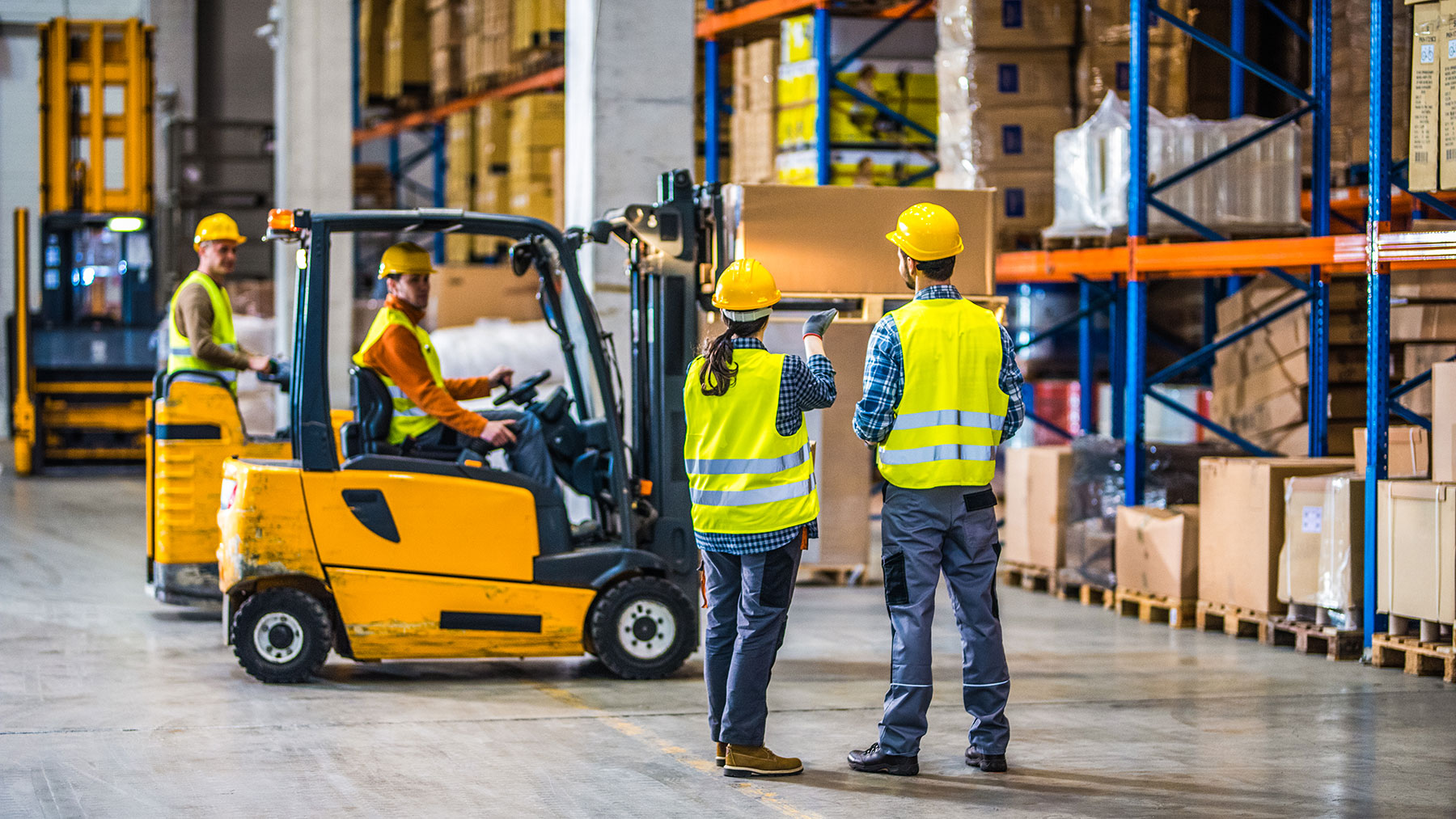
 Warehouses are fast-moving environments where people, vehicles, equipment, and materials often operate in close proximity.
Forklifts, walkways, blind corners, elevated routes, and busy loading areas all create safety risks that regional safety managers need to control across every site they oversee.
Why warehouse compliance matters
What is OSHA?
OSHA is the federal agency responsible for setting and enforcing workplace safety and health standards in the United States.
Created under the Occupational Safety and Health Act of 1970, OSHA began operating in 1971. The agency can issue citations and proposed penalties when employers fall short of applicable standards. In severe cases, OSHA enforcement can require hazard abatement, lead to substantial penalties, and trigger urgent corrective action.
In warehouse environments, OSHA’s powered industrial truck requirements and materials-handling standards govern many of the safe operating practices for forklift operators, pedestrians, and employers.
Forklift operators
- Keep a clear view of the path of travel and do not move the truck if visibility is obstructed.
- Slow down and sound the horn at cross-aisles, intersections, corners, and other locations where visibility is obstructed.
- Warn pedestrians when there is not enough safe clearance.
- Use site-approved controls, such as spotters, where required by the employer’s traffic plan.
Pedestrians
- Use designated pedestrian walkways where available or stay to one side of equipment aisles.
- Keep a safe distance from operating forklifts and be aware that lift trucks cannot stop suddenly.
- Never stand or pass under a raised load or lifting mechanism.
- Do not ride on a forklift unless authorized, and the forklift is designed for riders.
Safety managers
- Keep permanent aisles and passageways clear, in good repair, and appropriately marked where mechanical handling equipment is used.
- Require operators to follow posted speed limits and travel at speeds that allow forklifts to stop safely for the conditions.
- Separate pedestrian traffic from forklift traffic where possible using adequate walking space, floor striping, barriers, or other workplace controls.
These are foundational practices drawn from OSHA standards and guidance for powered industrial trucks and materials handling. Depending on site layout, equipment, processes, and hazards, warehouses may need to comply with additional OSHA standards. For regional safety managers responsible for multiple locations, maintaining consistency can be one of the biggest challenges.
The warehouse compliance challenges regional safety managers face
Warehouse compliance is not something safety teams can treat as a one-time exercise. Falling short can result in citations, proposed penalties, operational disruption, and reputational damage.
In May 2026, U.S. warehousing and storage employment stood at about 1.842 million people, seasonally adjusted, according to U.S. Bureau of Labor Statistics data published via FRED. At that scale, employee retention, workforce confidence, and safer day-to-day operations are major priorities for safety managers.
Regional safety managers need to stay on top of several key areas to support compliance across every warehouse site:
Operator training and certification
OSHA requires employers to ensure powered industrial truck operators are trained, evaluated, and certified for the equipment they use and the specific conditions of their workplace. Operator performance must be evaluated at least once every three years, with refresher training provided when required.
Additional safety training
Additional warehouse safety courses can help teams strengthen their understanding of OSHA expectations, hazard identification, emergency response, material handling, and forklift operations. Before using any course as evidence of compliance, safety managers should verify whether it is accredited, regulated, or recognized by the relevant authority.
Inspections
If OSHA receives a complaint or identifies a warehouse through an enforcement program, it may conduct an inspection, typically without advance notice. Safety managers should be ready to demonstrate that hazards are being controlled, required training is maintained, and corrective actions are addressed promptly.
Using Powerfleet’s in-warehouse solutions to strengthen warehouse safety
Many warehouse risks stem from people working near industrial vehicles and material handling equipment, especially forklifts. Traffic management, floor safety, and driver behavior are therefore critical areas for regional safety managers.
Physical controls such as mirrors, one-way traffic routes, high-visibility tape, signage, and barriers can all help reduce risk. Powerfleet adds another layer of visibility by giving safety managers tools to monitor vehicle activity, operator behavior, and site-level safety trends.
With Powerfleet’s in-warehouse solutions, teams can use real-time monitoring, trend data, and automated reports to manage key health, safety, and compliance requirements more consistently across locations.
These insights can also support coaching and training, helping forklift operators follow safer practices as part of their daily routine.
How Powerfleet safety technology supports warehouse compliance
Powerfleet’s in-warehouse solutions work alongside existing safety programs to help regional safety managers improve visibility, standardize processes, and support compliance efforts.
A safer warehouse is less likely to fall short of compliance requirements and can also benefit from fewer incidents, lower preventable vehicle damage, and more efficient operations.
Forklift Gateway
Forklift Gateway provides site managers with easier access to key vehicle and operator data. It can help teams monitor driver behavior, including speeding and idling, while supporting visibility into vehicle condition and preventive maintenance needs.
As a compact, wireless unit, Forklift Gateway can support a range of sensor options, including GPS, speed and distance, loaded/unloaded status, and pedestrian proximity detection, depending on the configuration. It can also be used with relevant safety checklists to encourage safer vehicle use and more consistent operating practices.
Pedestrian Proximity Detection
Pedestrian Proximity Detection helps improve driver awareness in busy warehouse environments. Powerfleet’s vision-based system is designed to operate without wearable tags or special apparel, using configurable Caution Zone and Danger Zone alerts to identify potential risks around the vehicle.
When an object enters the Caution Zone, the system can trigger visual and audible warnings for the driver. If the object continues into the Danger Zone, additional alarms can be triggered. When integrated with Powerfleet Speed Manager, these alerts may also help reduce vehicle speed and support safer operation.
Speed Manager
Driver behavior can be affected by fatigue, distraction, site conditions, and time pressure. Speed Manager helps keep forklifts and other vehicles operating within configured speed limits, supporting safer driving behavior throughout the warehouse.
Speed Manager can reduce a vehicle’s maximum speed in response to configured events and sensor inputs, such as impacts, pedestrian proximity alerts, or selected safety compliance triggers. It is designed to control speed in both forward and reverse on compatible electronically controlled forklifts.
Digital Video Recorder
Wireless cameras and digital video recorders can support incident review, coaching, and compliance efforts. Vehicle-mounted cameras can help teams capture and review relevant footage from incidents and near misses.
This footage can help safety managers investigate what happened, identify recurring risks, and reduce the likelihood of similar issues in the future. Teams can use these insights to update processes, deliver targeted training, and pinpoint areas where compliance practices need attention.
Creating a culture of warehouse safety
When used alongside Powerfleet’s Enterprise Dashboards, these tools can help safety managers build a more consistent, data-led approach to warehouse safety and compliance.
Enterprise Dashboards consolidate data from multiple sites into a single enterprise-level view, giving multi-site teams clearer visibility into operational performance. This can help managers identify locations that need attention and focus resources where they can have the greatest impact.
By surfacing metrics such as impact rates, lockouts, utilization, and other operational indicators, Enterprise Dashboards can support more informed decisions, targeted follow-up, and continuous improvement across warehouse operations.
Improve warehouse compliance with Powerfleet
Compliance is there to help keep people safe in warehouses, but managing it consistently across multiple sites can be complex. Powerfleet’s in-warehouse safety solutions give regional safety managers the tools to make warehouse safety and compliance more visible, measurable, and manageable.
With cameras, speed management, training support, and operational insight, Powerfleet helps safety teams support compliance while staying focused on what matters most: keeping warehouse employees safe.
Get in touch today to learn how Powerfleet’s in-warehouse solutions can help ensure safer, more compliant warehouse operations.