 Solutions
  Products
  Industries
 Resource Center
  Company
  Contact

 North America
  Europe
  Deutschland
  Asia-Pacific
  Canada (Français)
  Africa
  Argentina
  México
  Brasil
 Industries that rely on fleet management
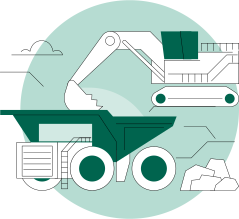
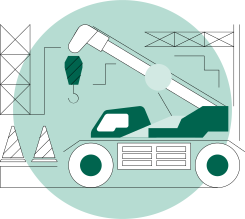
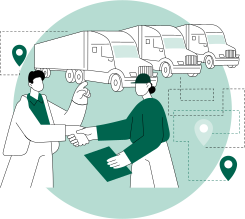
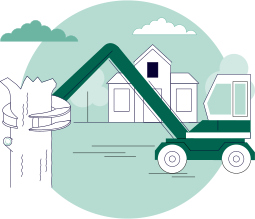
A wide range of industries depend on effective fleet management, including:











What Does a Fleet Manager Do?
A fleet manager oversees and coordinates the operations and movements of a fleet of vehicles. Working alongside colleagues from other departments, their primary responsibility is to ensure deliveries and jobs are completed on time while prioritizing driver safety, vehicle maintenance, and regulatory compliance. Fleet managers also analyze fleet data to identify opportunities to improve efficiency, vehicle uptime, and profitability.
Reduce overall fleet costs
Minimizing costs means eliminating unnecessary expenses and ensuring the fleet runs as efficiently as possible. Controlling fuel, maintenance, and operational costs is crucial: fuel-efficiency programs and asset tracking help combat price fluctuations, theft, and misuse, improving both productivity and profitability.
Track vehicle movements
Regardless of fleet size, knowing every vehicle’s whereabouts and status can be challenging. Fleet managers increasingly rely on GPS fleet tracking and connected fleet management systems for the real-time visibility and operational insight needed to manage vehicles and other mobile assets effectively.
Protect driver safety
Ensuring driver safety is essential but can be difficult when managers are physically distant from their drivers. Dashcams and GPS tracking provide real-time visibility, support driver training, and help build a stronger safety culture across the fleet.
Improve driver retention
Increasing and stabilizing driver retention is a key goal for fleet managers. Coaching and training programs, a better workplace culture, and building trust between managers and drivers all help improve retention.
Acquire the right vehicles
Fleet managers are responsible for acquiring fleet vehicles: determining the right timing and quantity and ensuring they choose the most suitable vehicles. This is rarely straightforward. A sound acquisition strategy depends on understanding and forecasting vehicle usage, with vehicle class, lifecycle, and market timing all playing a part.
Comply with regulations
Fleet managers must also keep pace with regulatory requirements for their vehicles, drivers, and industry, from licensing and roadworthiness to hours-of-service and safety rules. Staying on top of compliance reduces the risk of fines, downtime, and reputational damage, while helping to keep drivers and the public safe.