Solutions
 Products
 Industries
 Resource Center
 Company
 Contact


 North America
 Europe
 Deutschland
 Asia-Pacific
 Canada (Français)
 Africa
 Argentina
 México
 Brasil
Why SaferStops matter
Of the 137 facilities classified as truck stops in a SaferStops Association assessment, only 39 meet the security requirements of South Africa’s National Truck Stop Framework. As Transport Month ends, that figure is a reminder that road safety does not stop when the engine is switched off.
SaferStops Association is a South African non-profit membership organisation working with government, drivers, fleet operators and truck-stop owners to improve truck-stop infrastructure. Powerfleet Africa supported the launch of the framework and the SaferStops Connects app and is exploring with SaferStops how connected intelligence could support their implementation.
The 2026 Transport Month theme, “Building a safe, sustainable, reliable and affordable transport system”, invites us to look beyond vehicles and roads to the support systems around them, including the places where drivers stop to rest.
Road safety extends beyond the vehicle
Commercial drivers work long distances to tight schedules, in congestion and unpredictable conditions. These pressures can increase fatigue, which makes access to suitable rest facilities part of managing road safety. At the framework launch, Minister of Transport Barbara Creecy said driver fatigue remains an important road safety concern.
Government research found inadequate lighting and security at truck stops, poor ablution and shower facilities, limited access to driver wellness services and inconsistent standards between facilities. Some trucks are parked along roadsides because suitable rest stops are unavailable or inadequate.
Road safety therefore cannot rely on in-vehicle technology and driver monitoring alone. Safe truck stops offer more than parking. They give drivers somewhere to rest, recover and prepare for the next leg of the journey.
A national framework for safer truck stops
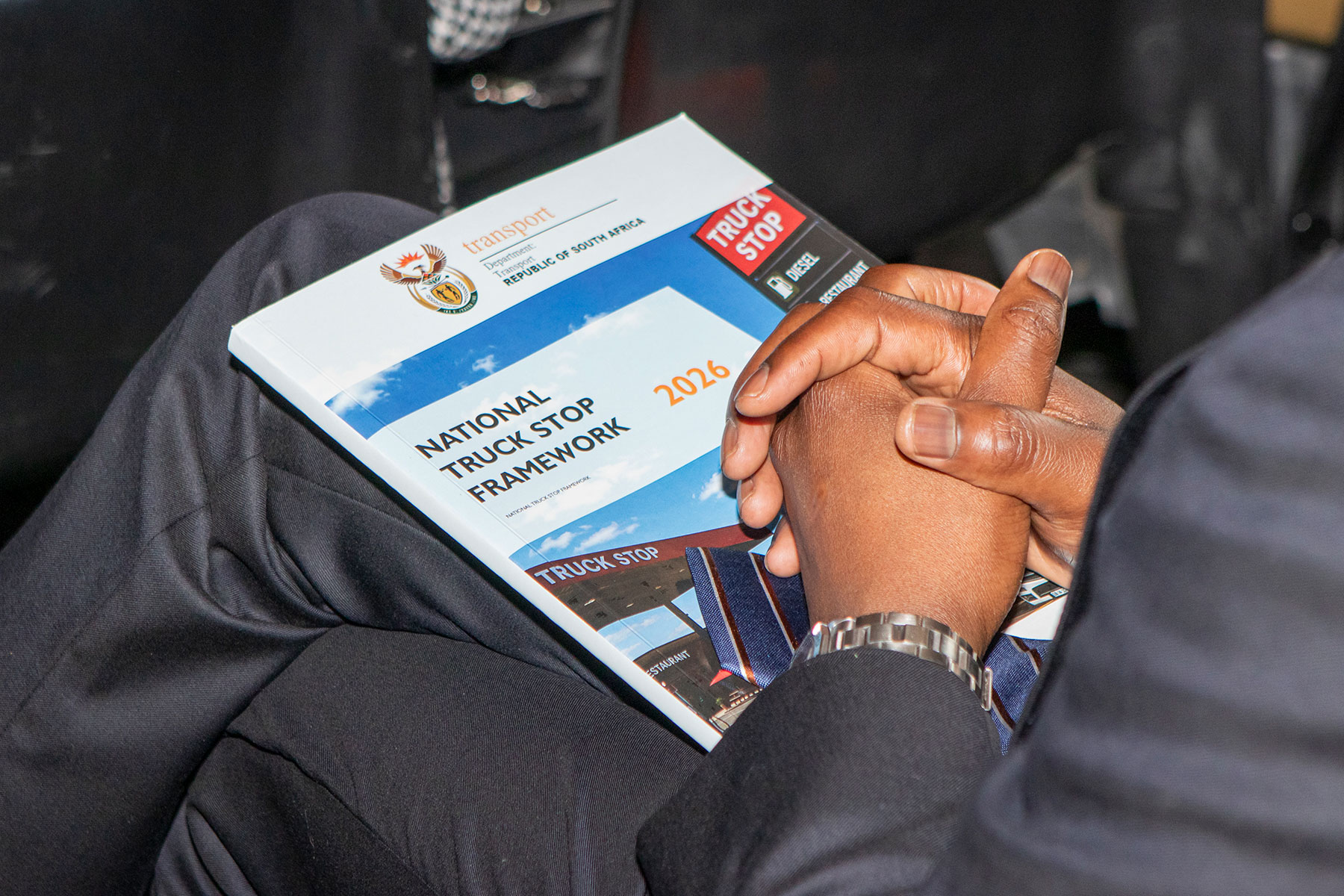
On 17 September 2026, Minister Creecy launched the National Truck Stop Framework and the SaferStops Connects app at the Sasol N17 Truck Stop in Mpumalanga, with Powerfleet among the supporters of the event. Developed by the National Department of Transport with industry stakeholders, and informed by two years of SaferStops site visits, the framework sets a national approach to planning, assessing, classifying and improving truck stops.
It sets measurable criteria for security, amenities, health and wellness, and sustainability. That gives government, fleet operators and investors a clearer basis for identifying gaps and prioritising improvements across the road-freight network.
The assessment shows the scale of the task. SaferStops visited 179 sites and spoke to 3,444 drivers. Of the facilities evaluated, 137 were classified as truck stops and only 39 met the security requirements. The framework is a foundation. Its value will depend on how well the standards translate into practical improvements for drivers and fleet operators.

Connecting drivers to safer stopping options
Standards only help if drivers can act on them. That is the job of SaferStops Connects, launched alongside the framework and available free to drivers and the wider industry. Drivers can find and navigate to secure truck stops, rate their experiences to drive better infrastructure, and access truck-stop promotions, short courses and roadside health and wellness events.
For fleet operators, better information about stopping locations can support journey planning and a more proactive approach to driver wellbeing. For truck-stop owners, driver ratings show where services fall short and where to invest.
Together, the framework and the app pair a consistent way to assess truck-stop quality with a way to put that information in drivers’ hands, so decisions about where to rest become part of journey planning rather than an afterthought.
The role of connected intelligence in driver safety
AI-powered video, driver behaviour monitoring and real-time fleet intelligence already give operators visibility of risks such as fatigue, distraction and unsafe driving. Spotting a risk is only part of the answer. Operators also need to know where drivers can stop safely, how rest periods fit into route planning and whether suitable facilities exist along key corridors.
Powerfleet Africa and SaferStops are exploring how connected intelligence, fleet participation and industry collaboration could support the framework’s implementation and long-term impact. Linking operational insights on routes and stopping patterns with information about truck-stop locations and facilities could strengthen route and rest planning.
Over time, aggregated and appropriately governed insights could also help infrastructure owners, insurers and public-sector stakeholders understand stopping patterns, identify gaps and prioritise investment where it is needed most. Discussions between the two organisations continue. The aim is practical action that supports driver safety and wellbeing, not simply more data.
Taking road safety beyond Transport Month
The focus must now shift from awareness to sustained action. Improving South Africa’s truck-stop infrastructure will need continued collaboration between government, transport operators, drivers, infrastructure owners, insurers and technology providers.
For fleet operators, that means treating driver rest and wellness as part of operational safety, not as something separate from fleet performance.
South Africa’s commercial drivers keep supply chains moving. Giving them safer places to stop, reliable information and the right support is an investment in road safety and in the resilience of the transport sector.
Learn more about Powerfleet's safety solutions.