Solutions
  Products
  Industries
 Resource Center
  Company
  Contact

 North America
  Europe
  Deutschland
  Asia-Pacific
  Canada (Français)
  Africa
  Argentina
  México
  Brasil
 In warehouses, ports, and yards across North America, forklift operations are running at a high tempo right now. Operators are trained and certified. Speed limits are enforced, pre-shift checks are completed, and activity is monitored. By every measure of process and compliance, operations are working as they should.
Yet serious forklift incidents continue to happen in operations where every box on the safety checklist is checked. The cause is rarely a single dramatic failure. It is the quiet accumulation of small, unchallenged risks that don’t appear in the data: the near-miss no one logged, the blind spot no one mentioned, the assumption no one tested. These are the hidden risks that systems were never designed to surface, and no amount of effort, on its own, can resolve them.
National Forklift Safety Day on the 9th of June is a useful moment to revisit four of them.
Low speed is not a substitute for low risk
It is intuitive to assume that slower forklifts are safer forklifts. And in many ways, that is true. Lower speeds reduce kinetic energy, give operators more time to react, and limit the severity of impacts when they do occur. Most facilities enforce strict speed limits for exactly these reasons.
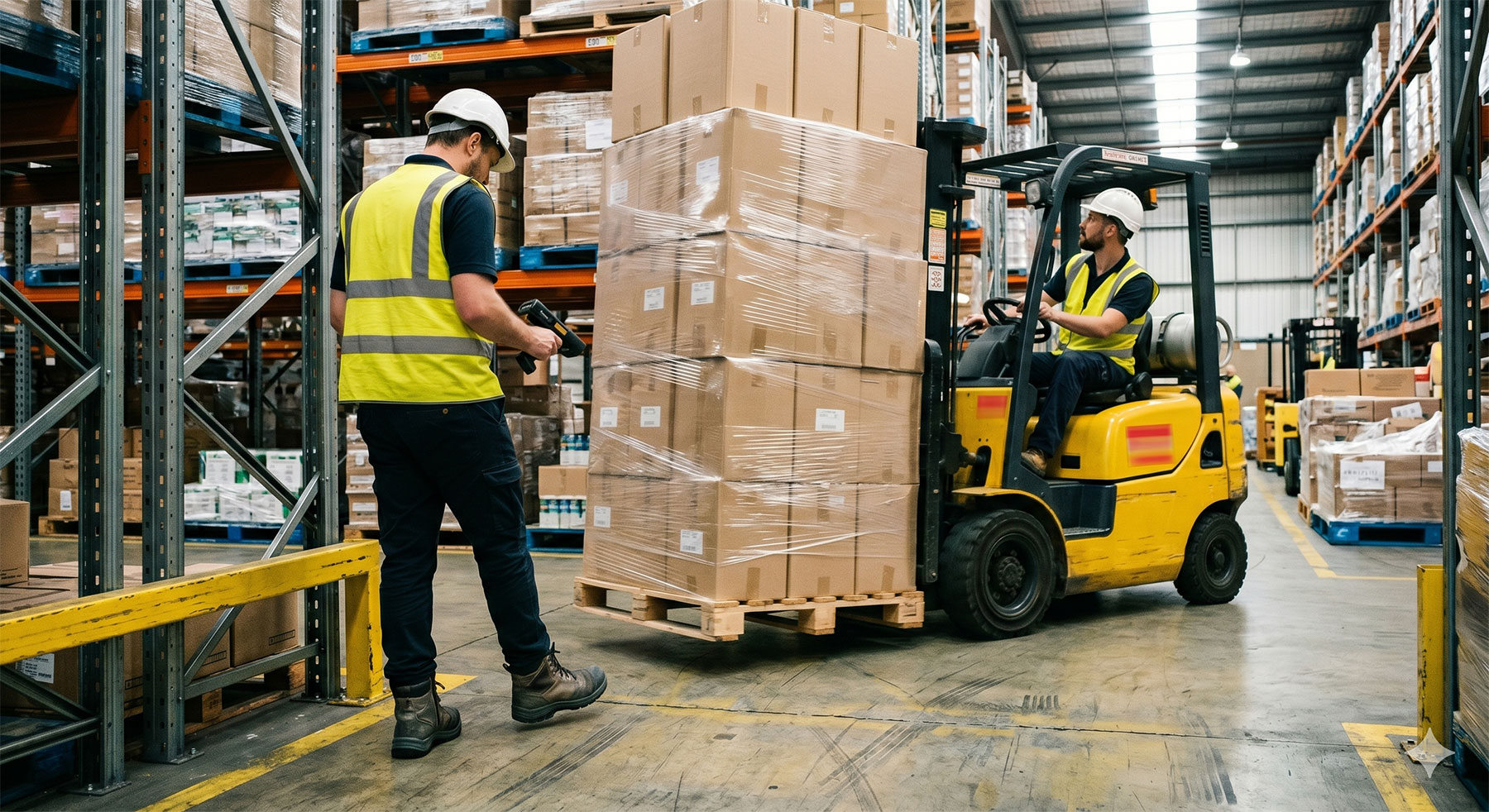
But serious pedestrian incidents involving forklifts often happen at low speeds. They happen at congested intersections, dock doors, and shared aisles. These are places where pedestrians and forklifts move close together in environments with limited sightlines. In those moments, the determinant of safety is not the vehicle’s speed. It is whether the operator can see the pedestrian and whether the pedestrian can see the forklift in time for either to react.
Speed control alone cannot solve a visibility problem. When an operator’s line of sight is blocked by a load, a stack, or a building feature, the margin between safe and unsafe operations is measured in inches and milliseconds, not miles per hour.
Training prepares operators. It does not give them sight.
In any well-run operation, forklift operators are trained, certified, and supervised. Standards are reinforced through pre-shift inspections, periodic refresher courses, and direct observation by team leaders. This is the work that builds a real safety culture, and it matters.
But training focuses on the operator’s behavior, not the conditions around them. An operator can be flawlessly trained and still unable to see a pedestrian stepping out from behind a load, around a corner, or into a blind spot at an aisle intersection. They can drive perfectly yet still encounter a moment when the environment’s geometry, the height of the load, and the timing of someone else’s movement combine to create a risk no amount of training can resolve.
Training prepares operators to respond safely to the risks they can see. It does not, by itself, provide visibility into the risks they cannot see.
Near-misses are not noise. They are early warning signals.
When a forklift incident happens, most facilities have a well-defined process for what to do next: investigate, document, identify the root cause, and implement a corrective action. These processes exist precisely because incidents are visible. There is damage to assess, an injury to treat, and a vehicle to repair.
Near-misses, by contrast, leave no visible trace. The pedestrian was missed. The operator kept driving. The shift continued. In most facilities, that moment never appears in a single report.
This is a significant problem because near-misses are the most reliable early warning of incidents to come. Aggregated over time, they reveal patterns: the intersections where they cluster, the times of day when they spike, and the loads and configurations that produce them. Without visibility into near-misses, safety teams work with data that omits the moments that matter most: the moments that, if seen and acted on, would have prevented the incident that followed.
The real cost of a forklift incident starts after the incident
When a forklift-pedestrian incident occurs, the immediate concern, and rightly so, is the person involved. Everything else is secondary in that moment.
What follows, however, has consequences that ripple far beyond the injury itself. Work in the affected area halts. Investigators arrive. Documentation begins. The vehicle is taken out of service. Operations slow as the team completes reporting, regulatory notifications, and root cause analysis. Throughput drops. Backlogs build. Insurance, legal, and HR teams become involved. Coaching and retraining cycles begin.
The National Safety Council estimates that the total cost of work-related injuries in the United States reached $181.4 billion in 2024, including wage and productivity losses, medical expenses, and administrative costs. But for the operations leader trying to recover the rest of the day, the cost is not a number on a page. It is the loaded truck that left an hour late, the customer order that missed its window, and the team that worked through the disruption without a clear sense of when normal would resume.
Seeing what the operator can’t
The four risks above share a common thread. They are all functions of visibility. Slow speeds do not solve them. Training does not solve them. Reactive incident management does not solve them. They require a system that can see what the operator cannot, in real time, before risk becomes an incident.
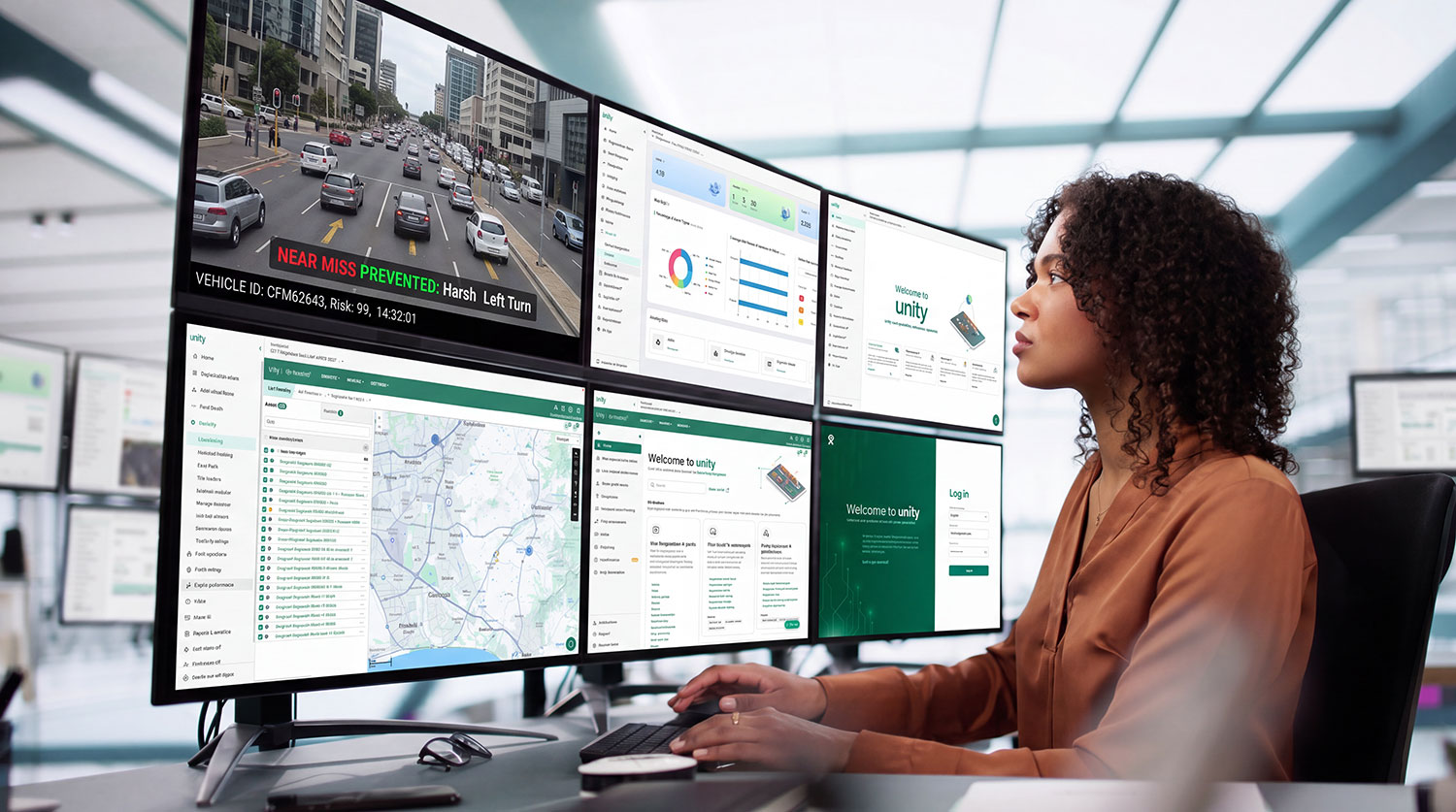
This is the role of Pedestrian Proximity Detection. PPD uses AI-powered cameras mounted directly on the forklift to detect pedestrians and other vehicles in the operator’s path. When proximity thresholds are breached, PPD alerts both the operator and the pedestrian, providing the seconds of reaction time that line-of-sight cannot reliably offer. Every event is captured and logged, turning near-misses into visible data that safety teams can act on.
The goal is not to replace the systems already in place. Speed limits, operator training, and incident response remain essential. PPD adds the layer of real-time visibility those systems were never designed to provide. Alongside operator authentication, impact detection, and operational analytics through Unity, it closes the gap between what your operators are trained to see and what your safety leaders need to see.
This National Forklift Safety Day, if you’d like to see how Powerfleet’s Pedestrian Proximity Detection works on the vehicle and in the safety dashboard, we’d welcome the conversation.