Solutions
 Products
 Industries
 Resource Center
 Company
 Contact


 North America
 Europe
 Deutschland
 Asia-Pacific
 Canada (Français)
 Africa
 Argentina
 México
 Brasil
A driver glances at a phone. The gap to the vehicle ahead narrows. Hours into a long journey, fatigue starts to dull concentration.
Nothing has happened yet. There is no collision report, insurance claim or damaged vehicle. Yet the strongest safety signal has already appeared, and it is worth responding to.
For African fleet operators, this is where AI video earns its place: it spots risky behaviour while there is still time to address it.
Detection alone does not make roads safer, though. An alert needs a timely response, a video clip needs context, and a recurring behaviour needs a coaching conversation that helps the driver improve. Fleets that connect these steps turn early warnings into lasting change.
Africa's road-safety challenge
Acting on risk before it leads to a crash is especially urgent in Africa. In March 2026, the World Health Organization reported that road deaths in the WHO African Region rose by 17% in the decade to 2021, to nearly 250,000 a year. The region also has the highest road fatality rate in the world. That same month brought a turning point: the African Road Safety Charter came into force, giving the continent its first legally binding road-safety framework.
A charter sets the direction, but fleet operators shape road safety every day through the decisions they make: how they plan journeys, manage fatigue, maintain vehicles and support drivers.
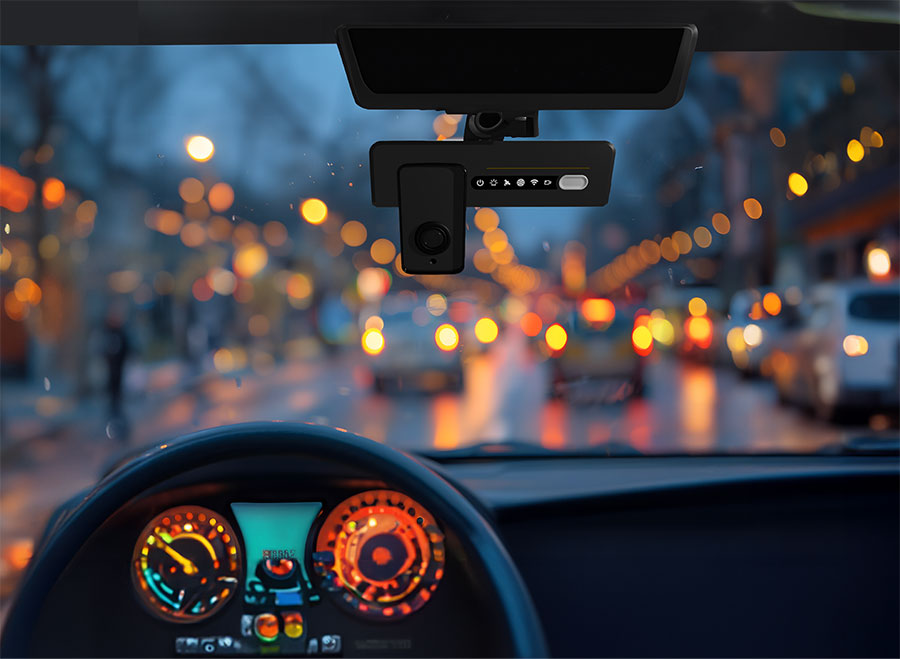
AI-powered video gives them a clearer view of what happens on the road. Powerfleet's AI video solutions use driver-facing cameras to detect fatigue, distraction and mobile-phone use, while road-facing ADAS cameras monitor the road ahead. Depending on the system and configuration, in-cab alerts give drivers a chance to correct their behaviour, and event footage shows managers what needs attention.
Context is what makes that footage useful. For example, harsh braking may point to poor anticipation, or it may be a necessary reaction to another road user. Reviewing the clip helps keep coaching specific and fair.
What African fleet results show
DHL Supply Chain Uganda is a practical example. In its 2026 Powerfleet case study, the company reports a reduction of more than 95% in unsafe driving behaviours and insurance premium reductions of up to 20%. Its 53-vehicle deployment combines vehicle tracking with AI-powered video, including fatigue cameras.
The result reflects operational commitment as much as investment in technology. A dedicated internal resource monitors cameras and tracking daily, produces reports and shares insights with the team. Recorded evidence then supports driver feedback and coaching.
The 95% figure refers to unsafe driving behaviours, not crashes. It shows how a fleet can reduce the specific behaviours its safety programme exists to address.
Intercape adds a complementary example from Southern Africa. Its reports around 80% fewer accidents and more than 85% fewer overspeeding incidents. These results followed the introduction of an integrated camera and connected vehicle solution across its fleet of more than 300 coaches and support vehicles. Intercape attributes the drop in accidents directly to SafeGuard's real-time alerting. These alerts let its operations team intervene before incidents escalate and coach drivers using factual event data.
These are customer-reported results from individual operations. They show what an integrated safety programme can achieve, not a reduction every fleet should expect.
Detection is only the first step
A safety alert only becomes useful when someone understands it and acts on it.
According to a June 2026 Powerfleet Africa article, specialists in the Unity Operations Centre reviewed more than 57,000 high-risk driving events through the Vision Bureau process. The average time from detection to intervention was 208 seconds, and 2,425 events were confirmed as genuine high-risk situations that needed immediate customer attention.
These figures measure the response process; they are not a count of crashes prevented. They do, however, raise a practical question for any fleet: how quickly can it move from spotting a concern to supporting the driver?
Human verification helps decide which alerts need escalating. Managers can then respond to the circumstances, whether that means contacting a driver, following up on fatigue or arranging targeted coaching.
Build trust, then measure progress
Drivers need to understand how video will be used and how it can protect them. At DHL Supply Chain Uganda, education and communication helped overcome early resistance, and the system was presented as a way of protecting drivers.
Fleet managers also need to track progress consistently, including repeat risky behaviours, response times, coaching outcomes and crashes relative to distance travelled.
A camera can flag a moment that deserves attention. Lasting improvement depends on the people and processes around it.
For African fleets, the aim is to act on those moments: recognise risk earlier, intervene with the right information and build a safety culture that gets every driver home safely.
Turn video events into fair, consistent coaching conversations: see how Powerfleet's driver coaching module helps fleets act on what the cameras flag.