Solutions
  Products
  Industries
 Resource Center
  Company
  Contact Us

 North America
  Europe
  Deutschland
  Asia-Pacific
  Canada (Français)
  Africa
  Argentina
  México
  Brasil
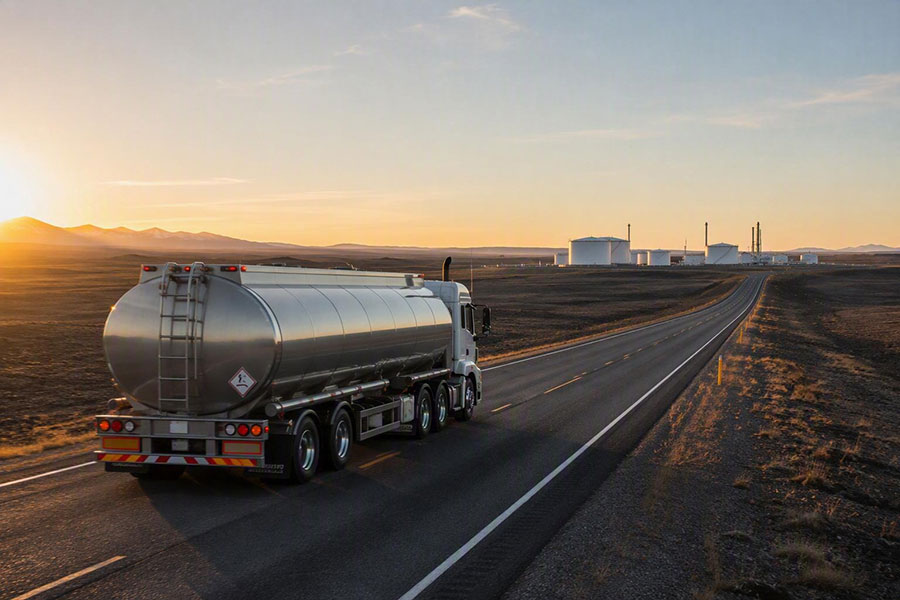
 According to the IOGP, driving-related incidents have historically been the single largest cause of fatalities across oil and gas operations. That one fact should shape where safety leaders spend their attention.
But the challenge is bigger than just road safety. The same operational risks often extend across transport, yards, terminals, depots and sites, where disconnected systems can make it difficult to identify patterns before incidents occur.
Exploration, production, and distribution carry obvious process hazards, yet the persistent killer sits on the road between the depot and the site. The workforce makes that harder to manage. Much of the driving is done by contractors who move between operators and adapt to different rules each week, so a standard that holds at one site does not necessarily carry over to the next. Applying a consistent approach across people, vehicles, and locations is hard, and the gaps are where incidents happen.
Risk does not stop at the road (and neither should visibility)
Oil and gas operations span public roads, terminals, depots, yards, storage facilities, and operational sites. When people, vehicles, equipment, and hazardous materials operate in close proximity, isolated safety processes and disconnected systems can leave critical risks hidden. Most operators already know this. The problem is rarely a lack of data; it is that the data lives in separate places.
The recurring pain points look like this:
- On the road: fatigue, distraction, speeding and hazardous-material transport put drivers, contractors, cargo and the public at risk.
- In yards and on sites: reversing manoeuvres, restricted zones and vehicle-pedestrian interactions create injury risk that is hard to see until something goes wrong.
- Across compliance: managing contractors and maintaining consistent standards across fleets and sites require accurate records and real oversight, not spreadsheets after the fact.
- Across systems: video, sensors, and safety platforms often run independently, so no one has a single view of where the real risk lies.
For years, many safety programmes focused on recording incidents after they happened. Leading operators are now shifting towards identifying risk before incidents happen by connecting operational, vehicle, asset and driver data into a single view.
Turning insight into action
Powerfleet connects safety, video, asset, and operational data so teams can identify risks earlier, intervene faster, and make better-informed decisions. That connection runs through Unity, a hardware-agnostic AIoT platform that ingests data from IoT devices, OEM systems, and third-party applications across more than 600 sources, then harmonises it into a single view of the operation. The approach is simple: connect the data, identify the risk, act earlier.
Rather than managing fleet safety, asset visibility, compliance, and site operations through separate systems, operators can gain a more complete understanding of risk across the operation.
In practice, Powerfleet's oil and gas solutions cover areas that operators typically manage separately: workforce safety, equipment tracking, in-transit visibility, hazardous materials monitoring, compliance workflows, and preventive maintenance support. Handled in isolation, each produces its own reports and its own blind spots. Brought together, they produce something more useful: a single view of where risk is building across the fleet, the yard, and the site.
1. Reduce exposure before incidents happen
Connect vehicle, video, operator, and site data to spot unsafe behaviours and repeated exposures before they escalate. VisionAI detects fatigue, distraction, and mobile phone use, as well as events such as harsh braking and speeding.
SafeGuard adds continuous, multi-variable risk assessment that updates in real time, helping teams identify the drivers and behaviours that need attention rather than waiting for a monthly report. The combined data can also reveal recurring events across routes, shifts, sites, and contractors, enabling teams to address patterns as well as individual incidents.
2. Respond before risks escalate
Once a risk is identified, give safety teams the tools to respond. VisionAI can use in-cab audio and visual prompts to correct behaviour in the moment. SafeGuard helps teams prioritise events for review, monitor developing situations using live video and audio, send alerts, initiate coaching, or speak directly to the driver to prevent escalation.
Automated review also cuts the noise, reducing time spent reviewing footage by up to 80 percent, which matters when a safety team covers hundreds of vehicles across several countries.
3. Create a single operational picture
Bring vehicles, assets, people, and operational systems into a single picture rather than a stack of disconnected tools. For most operators, that means mixed vehicle types, several suppliers, and a decade of accumulated systems, so the value comes from connecting what is already installed and adding the missing layers.
4. Keep assets visible beyond the vehicle
Track equipment, trailers, tanks, gas assets, and other high-value mobile assets in the field or in transit using GPS, runtime monitoring, and asset grouping. Live location and usage data help operators maintain visibility of high-value equipment on-site and on the move. Where hazardous materials are involved, in-transit monitoring can extend that visibility to the load and support faster investigation when a journey deviates from plan.
5. Prevent downtime in harsh environments
Breakdowns in remote or hazardous locations are a safety problem before they are a cost problem, because recovery puts more people and vehicles on difficult roads. Engine performance data, machine diagnostics, and fault alerts help maintenance teams identify developing problems, improve preventive maintenance scheduling, and respond before a fault leads to avoidable downtime.
6. Improve compliance and audit readiness
Improve access to event evidence and reporting to support investigations, audits and continuous improvement. Digitising safety checks, inspection reports and compliance logs replaces paper trails with records that can be produced on demand, which is what makes a single standard enforceable across a contractor base that changes from month to month.
7. Keep data flowing in remote locations
Much of this industry works well beyond reliable coverage, and a safety system that stops at the edge of the network is not much of a safety system. Edge computing and resilient communications collect and transmit data in low-connectivity zones, so lone workers, remote sites and long transport legs stay part of the same picture as everything else.
Because most operators run mixed vehicle types, suppliers and systems, Powerfleet is built to bring existing technology together rather than force a disruptive rip-and-replace programme. It also prioritises risk over alert volume, so teams focus on what needs attention rather than drowning in notifications.
How Nippon Sanso improved visibility at scale
Nippon Sanso, one of Europe's largest industrial and medical gas suppliers, uses Powerfleet across a 705-vehicle fleet to monitor risky driving, coach drivers and standardise reporting across more than a dozen countries.
During the pandemic, that visibility helped keep medical oxygen moving safely to hospitals under unprecedented demand. It is a clear example of connected data turning into safer distribution at scale.
Read the full case study here.
Where the industry is headed
The direction of travel is away from siloed safety tools and towards connected operational intelligence. Leading operators are moving from recording incidents to preventing them, using AI to surface risk in real time and to bring on-road and on-site data into a single view. The winners will be the operators who treat safety, asset visibility, and compliance as a single, connected discipline, not three separate ones. That is where the biggest reductions in fatalities and cost now come from.
Ready to identify risks before they become incidents?
Powerfleet helps oil and gas operators gain greater visibility across transport, yard, and site operations, so teams can act with better information. Speak with us if you're looking to reduce risk across transport, yard, and site operations while improving visibility across vehicles, contractors, assets, and operational systems. Alternatively, explore Powerfleet’s solutions for oil and gas fleets.