 Solutions
  Products
  Industries
 Resource Center
  Company
  Contact

 North America
  Europe
  Deutschland
  Asia-Pacific
  Canada (Français)
  Africa
  Argentina
  México
  Brasil
 Make your warehouse and forklift operations safer.
Our AI‑powered on‑site safety platform connects your people, equipment, and workflows to prevent forklift‑pedestrian incidents, automate compliance, and give you one clear view of every shift and site. Trusted by over half of the Fortune 500.
Request a demo
Book a meeting with our sales team today
Warehouse operations are under more pressure than ever.
- Rising automation creating new forklift-pedestrian collision risks
- Shrinking workforces stretching operators thinner
- Increasing compliance requirements
- Higher equipment utilization and asset strain
- Siloed systems that create dangerous blind spots
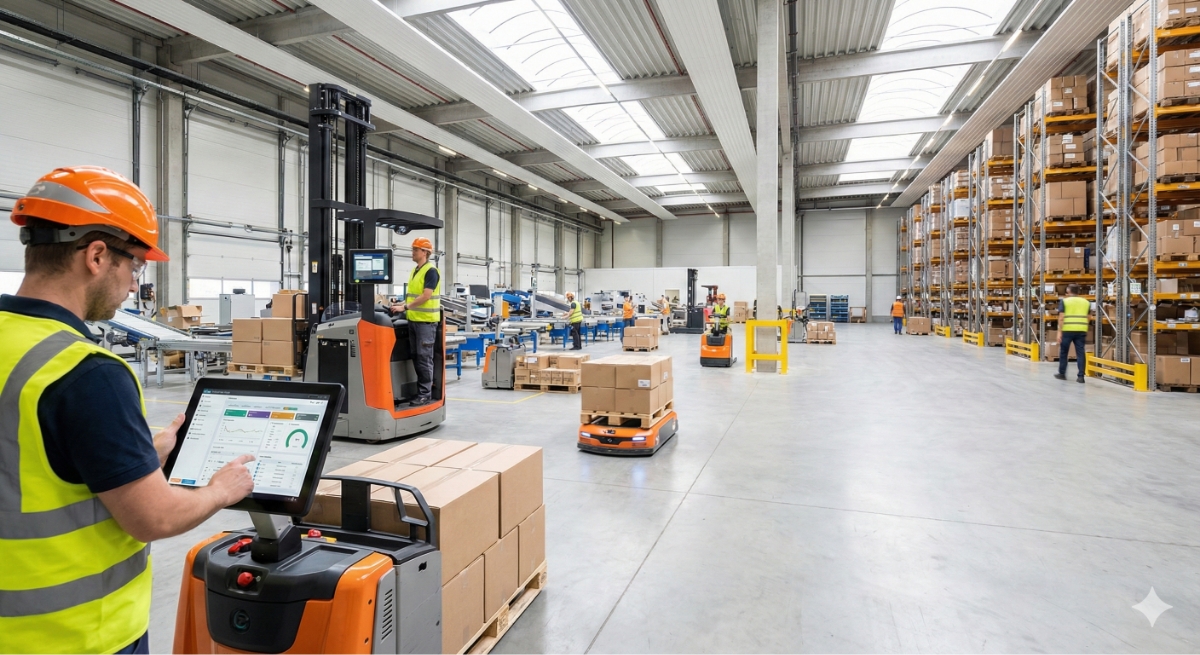
Fewer incidents. Cleaner audits.
Operations that scale without chaos.

Move from reactive to proactive. AI-powered video, pedestrian proximity alerts, and automated speed enforcement stop unsafe conditions before they become accidents.
Customers report up to 70% fewer safety incidents.

Digital pre-shift checklists, operator access control, and certification verification eliminate compliance drift — across every shift, every site. Audit readiness built in, not bolted on.
Customers achieve 100% inspection compliance.

Set your safety standards once and enforce them everywhere — from one site to fifty. Centralized visibility and automated workflows mean consistent performance as your operation grows.
Customers reduce fleet size by over 10% while improving safety outcomes.
From visibility to action in three steps


Request a demo
Book a meeting with our sales team today

"Powerfleet’s solution delivered not only the optimized safety and census benefits, but also significant incremental productivity improvements, above and beyond what our lift IDs were providing."

Executive Manager
Walmart

"Since deploying Powerfleet’s in-warehouse solution, we’ve seen a marked improvement in safety compliance and equipment utilization. The data has helped us proactively address operator behavior, avoid critical events, and reduce downtime."

Operations Manager
Kautex
"Since operators are now accountable for their vehicles with Powerfleet, there is heightened awareness, and drivers are more careful of their surroundings. Continental Tire has forecasted a 33% improvement in vehicle-related damage in just the warehouse alone."

Fleet Manager
Continental Tire
